

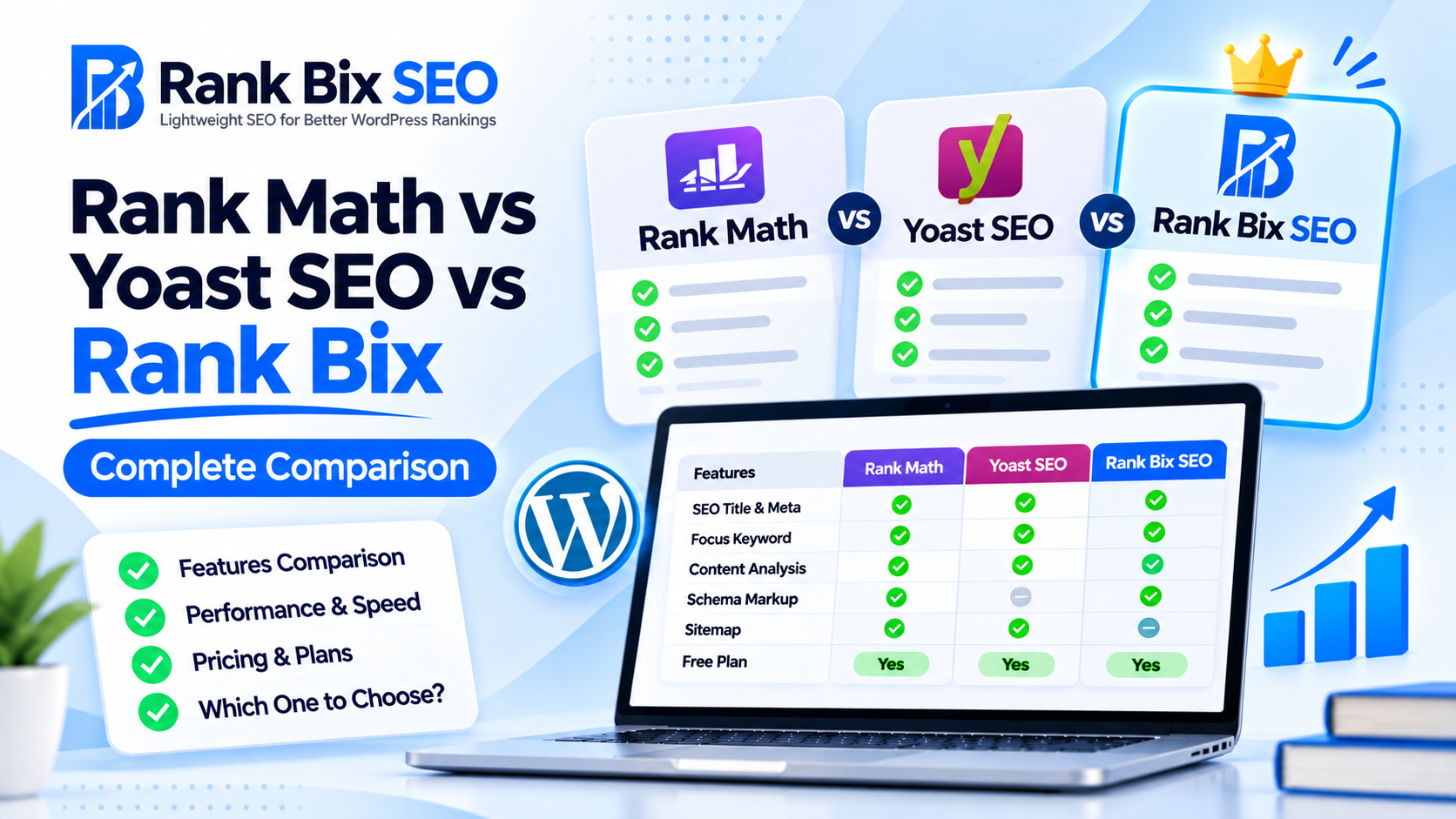
Choosing the right optimization tool often comes down to a classic debate: Rank Math vs Yoast SEO, but a new contender is changing how site owners look at performance. In this comprehensive guide, you will learn how the industry veterans stack up against a modern, lightweight alternative, helping you decide which plugin best fits your WordPress site’s speed and optimization needs.
Introduction to WordPress SEO Plugins
Search engine optimization plugins are the backbone of any successful WordPress website. They help you craft better meta tags, generate XML sitemaps, and ensure your content adheres to on-page best practices. However, not all plugins are created equal. While some offer massive suites of advanced tools, others focus entirely on maintaining peak website speed.
Choosing the wrong plugin can bloat your database, slow down your Time to First Byte (TTFB), and ultimately hurt your rankings. That is why evaluating your options carefully is critical before committing to a long-term SEO strategy for your brand.
Yoast SEO: The Industry Pioneer
As the original heavyweight in the WordPress optimization space, Yoast SEO set the standard for how content creators structure pages and target keywords. Its traffic-light scoring system (red, orange, green) has guided millions of bloggers through basic on-page optimization tasks over the past decade.
Yoast excels at readability analysis, structured data integration, and seamless XML sitemap generation. However, long-time users often notice that Yoast has grown heavier over the years, introducing numerous upsell notifications and complex menus that can clutter the classic WordPress editor interface.
Rank Math: The Feature-Rich Challenger
Rank Math burst onto the scene promising everything and delivering it. It quickly captured market share by offering advanced features in its free version that competitors locked behind paid walls, such as local SEO optimization, 404 monitoring, and robust schema markup generators.
The plugin utilizes a modular architecture, meaning you can turn off features you do not use. Despite this flexibility, managing Rank Math can still feel overwhelming due to its sheer volume of settings, wizards, and configuration prompts, making it better suited for advanced users who love deep-dive customizations.
Rank Bix: The Lightweight Revolution
If you are tired of bloated plugins slowing down your admin dashboard, Rank Bix represents a breath of fresh air. Built specifically for site owners who want effective optimization without sacrificing server resources, Rank Bix keeps your database lean and your site lightning-fast.
Rank Bix provides all the essential tools you need to rank higher on search engine results pages, including title and meta description management, without the unnecessary weight. It proves that you do not need hundreds of complex settings to achieve top-tier search visibility.
Head-to-Head Comparison: Performance and Usability
When putting these three tools side by side, performance and usability become the ultimate differentiators. Here is how they stack up in practical daily use:
- Site Speed & Bloat: Yoast can add extra requests; Rank Math offers modular controls; Rank Bix is engineered from the ground up to be ultra-lightweight.
- User Interface
Introduction to WordPress SEO Plugins
Choosing the right optimization tool often comes down to a classic debate like Rank Math vs Yoast SEO, but the landscape of WordPress search engine optimization has changed dramatically over the years. Early plugins focused primarily on basic meta tags and sitemaps. Today, these tools have evolved into comprehensive suites attempting to handle everything from schema markup to social media integration.
However, this massive expansion in features has a hidden cost. Many popular SEO solutions now suffer from bloated code, loading dozens of unused scripts and database queries on every single page load. When evaluating options like Rank Math vs Yoast SEO, site owners often overlook how this extra weight drags down Core Web Vitals, ultimately hurting your Google rankings and frustrating visitors.
A truly effective modern SEO plugin must balance power with performance. It should give you the critical data you need without slowing down your server. The ideal tool provides:
- Clean, modular code that only loads when necessary
- Streamlined user interfaces that avoid dashboard clutter
- Essential optimization features without the heavy resource drain
Understanding how performance impacts your bottom line changes how you look at WordPress optimization entirely.
Yoast SEO: The Industry Pioneer
When evaluating options for **Rank Math vs Yoast SEO**, understanding the veteran plugin is essential. Yoast SEO established the blueprint for WordPress optimization. Its primary strength lies in its core content analysis tool, which evaluates keyword density, subheading distribution, and sentence structure to ensure text remains accessible.
Beyond on-page guidance, the plugin automatically generates clean XML sitemaps, handles canonical URLs, and manages basic schema markup without requiring manual code insertion.
Pros of Yoast SEO
- Proven Reliability: Years of consistent updates mean rare site-breaking bugs during core WordPress upgrades.
- Stability: A dependable architecture trusted by millions of live websites.
- Extensive Documentation: Countless community tutorials, forums, and official courses make troubleshooting straightforward.
Cons of Yoast SEO
- Aggressive Upsells: Free users frequently encounter promotional banners urging upgrades to the premium tier.
- Resource Bloat: The codebase can consume noticeable server resources in the free version, occasionally slowing down backend dashboard response times.
While it remains a safe choice for traditional publishers, site owners seeking a leaner alternative often look at modern competitors.
Rank Math: The Feature-Rich Challenger
When analyzing Rank Math vs Yoast SEO, Rank Math stands out as a powerful challenger that disrupted the market by offering an extensive module system. Instead of forcing users to load every tool at once, it allows you to enable or disable features like redirections, 404 monitors, and image SEO individually. This modular approach keeps the plugin adaptable, though it remains a heavyweight contender packed with built-in options.
One of its standout strengths is advanced schema markup integration. While older plugins often require extra extensions or custom code for structured data, Rank Math includes a robust schema generator out of the box. You can easily assign specific schema types—such as recipes, FAQs, or reviews—to individual posts and pages.
For site owners weighing options in the broader Rank Math vs Yoast SEO debate, here is a quick breakdown of the platform’s advantages:
- Deep feature sets that cover almost every on-page optimization need without third-party add-ons.
- Modular design that lets you turn off unused components to save resources.
- Native Google Search Console integration that pulls performance data directly into your WordPress dashboard.
Despite these benefits, the plugin has drawbacks. The sheer volume of settings menus can cause severe option overload. Beginners often find themselves intimidated by the vast array of toggles, sub-menus, and advanced configurations required to set it up properly.
Rank Bix: The Lightweight Revolution
When looking beyond the heavy hitters in the ongoing Rank Math vs Yoast SEO debate, site owners often face a classic dilemma: do you want endless feature bloat, or do you want a fast website? That is where a streamlined alternative changes the game entirely for WordPress users.
Bloated plugins inject dozens of database queries and heavy scripts into every front-end page load, dragging down your Core Web Vitals. Rank Bix SEO approaches optimization with a minimalist mindset, protecting your server resources by stripping away unnecessary code and leaving only what moves the needle for your rankings.
You do not need a massive plugin to handle the technical fundamentals. The core free version covers all essential requirements:
- Clean XML sitemaps that search engines can crawl instantly
- Precise meta title and description controls for every post type
- Essential schema markup integration without the resource drain
- Straightforward technical configurations available right on WordPress.org
By keeping the codebase lean, Rank Bix delivers high performance and lightning-fast backend response times. It proves that you can achieve top-tier search visibility without sacrificing your site speed or server stability.
Head-to-Head Comparison: Performance and Usability
When analyzing Rank Math vs Yoast SEO, performance and resource consumption often decide the winner for performance-driven developers. Yoast loads a larger script footprint and creates numerous database tables, which can gradually slow down server response times. Rank Math offers modular features to reduce bloat, yet its massive feature set still introduces heavy database queries if left unconfigured. In contrast, Rank Bix is engineered specifically to eliminate database bloat entirely, ensuring lightning-fast script sizes that protect your Core Web Vitals and Largest Contentful Paint scores.
Usability and Learning Curves
Your workflow dictates which plugin fits best:
- Bloggers: Yoast provides a guided, beginner-friendly setup, while Rank Math overwhelms casual users with dozens of advanced toggles.
- Agencies: Rank Math shines with client management capabilities, whereas Rank Bix simplifies multi-site management through a unified, clean interface.
- E-commerce Stores: WooCommerce integration comes standard in all three, but lightweight plugins prevent checkout lag during high-traffic events.
Cost Analysis
Budget constraints separate free tools from enterprise upgrades. While Yoast and Rank Math lock essential features like local SEO or redirection managers behind expensive annual subscriptions, Rank Bix delivers core optimization tools completely free forever on WordPress.org, offering cost-effective Pro tiers for advanced agency workflows.
Frequently Asked Questions
Which plugin is best for beginners between Rank Math vs Yoast SEO?
Yoast SEO offers a very straightforward, step-by-step setup wizard that beginners find easy to follow. However, if you want more advanced features right out of the box without immediate paywalls, Rank Math provides a deeper toolkit, while Rank Bix offers a completely bloat-free experience for users who prefer simplicity.
Will switching from Yoast or Rank Math to Rank Bix hurt my rankings?
No, switching plugins will not hurt your rankings as long as you properly migrate your SEO metadata, titles, and descriptions. Rank Bix includes smooth import tools designed to transfer your existing data securely without losing your hard-earned search engine visibility or breaking any existing schema markup.
Why should I choose a lightweight plugin like Rank Bix?
Heavy SEO plugins often inject unnecessary scripts, CSS, and database queries across every page of your site, which can slow down load times and hurt your Core Web Vitals. Rank Bix keeps your site lightning-fast by loading only what you need, completely eliminating unnecessary bloat.
Final Verdict: Making Your Choice
Choosing the right WordPress SEO plugin comes down to balancing features and performance. Yoast SEO paved the way as the industry pioneer, while Rank Math delivers a feature-rich challenger experience packed with advanced options. However, as our comparison shows, heavy code and bloat can slow down your site. That is where Rank Bix introduces a lightweight revolution, giving you core optimization and audits without the performance drag. If you want faster page speeds, cleaner code, and an efficient workflow, your next step is simple: head over to WordPress.org, install Rank Bix for free, and experience streamlined SEO today.